
Coastal Building · Notes from the Field
Choosing Finishes That Hold Up to Salt Air
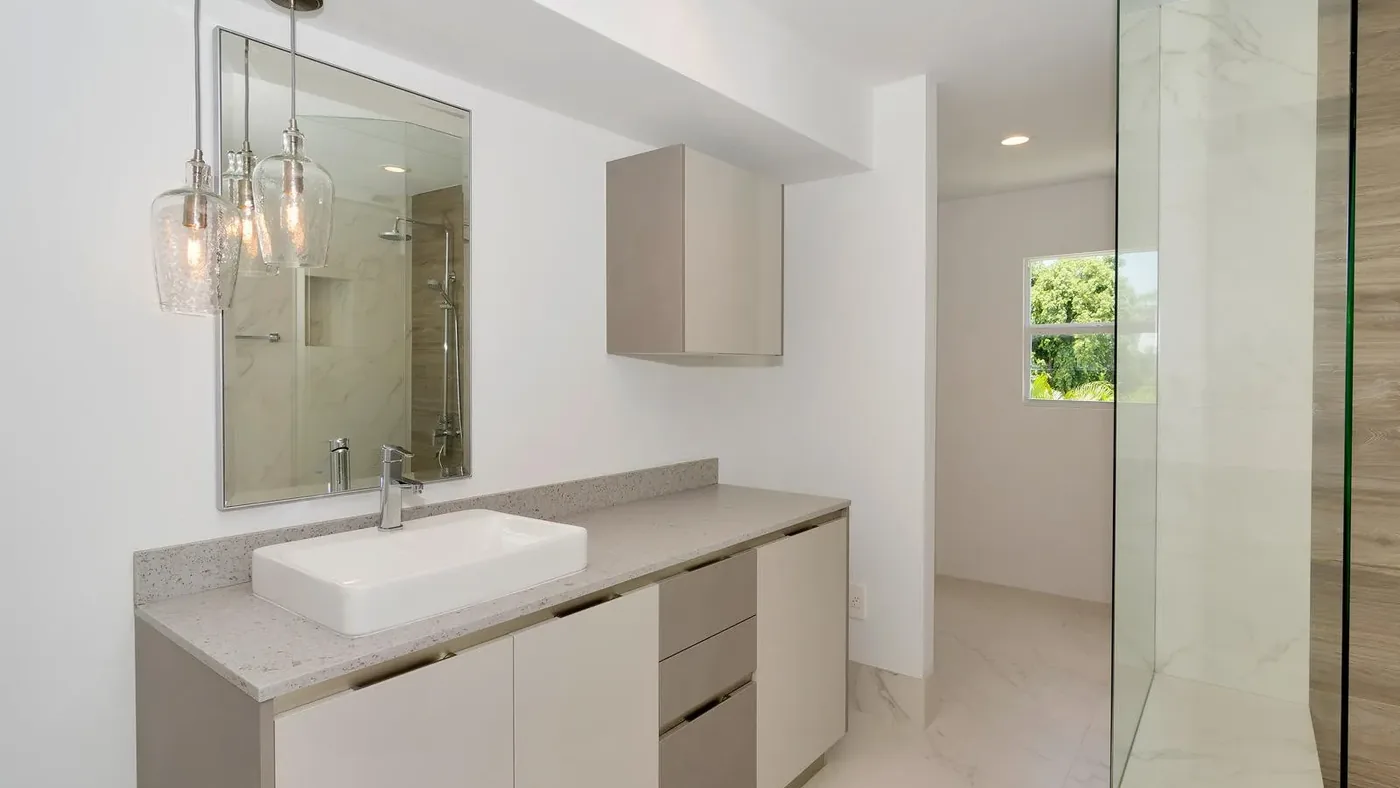
Salt air is patient. It does not ruin a finish overnight; it works on it a little every day, settling into pores, creeping under coatings and attacking any metal that was not made to resist it. For homeowners on the island, finish selection is as much a technical decision as an aesthetic one. Below is how CMR Construction Group works through the three categories that matter most: metals, hard surfaces, and the paints and sealants that hold everything together.
Start With the Metals
Metal is where most of the finish failures we see in coastal home renovation begin. Salt deposits hold moisture against a surface, and any metal that is not inherently corrosion resistant, or that relies on a thin plated layer for protection, eventually shows it. The first signs are usually small: a brown halo around a screw head, a dull spot on a faucet, a hinge that starts to squeak.
We sort metal choices by exposure. Anything outdoors, on a balcony or within reach of an open slider gets marine-grade stainless steel or another alloy suited to coastal service, including the fasteners nobody sees. Interior plumbing fixtures come from product lines with solid brass bodies and durable finishes, and we pay attention to finish type, since some living finishes are meant to patina while others should stay uniform.
Mixing metals is fine, and often looks better, but it needs care. Dissimilar metals in direct contact can corrode each other faster in a salty environment, so fastener and bracket materials are matched to what they hold. Cabinet pulls, towel bars, shower doors and light fixtures each get the same test before they are ordered: how they will look after years by the ocean, not just on the day they are installed.
Stone, Porcelain and Hard Surfaces
Hard surfaces carry the visual weight of a kitchen or bathroom, so it is tempting to choose them purely on looks. Near salt water, absorption matters just as much. Porous stones can draw in moisture and salt, which leads to staining, etching or a cloudy film that never quite cleans off. Denser materials resist that far better.
For countertops, vanity tops and wall cladding, we often steer clients toward quartzite, dense granites, sintered stone and high-quality porcelain slabs. Softer, more absorbent stones are not off the table, but they go where exposure is lowest and come with a clear understanding of the sealing and care they will need. Honed and textured finishes tend to hide the faint residue salt can leave better than high-polish surfaces do.
Installation details count as much as the slab. Edges and cutouts are sealed, grout is chosen for low absorption, and joints at the backsplash and around sinks get a sealant rated for wet areas. Stone that sits against an exterior wall or below a window gets extra attention, because any moisture coming through the envelope will show up there first. Getting those details right at installation is much easier than trying to restore a stained top later.
Paints, Sealants and Coatings for Coastal Exposure
Coatings are the protective skin of a remodel, and they fail from the bottom up. A premium paint applied over poorly prepared metal or damp drywall will bubble and peel no matter what the label says. That is why preparation gets most of the attention on our projects: surfaces are cleaned of salt residue, rust is fully removed from metal, and substrates are checked for moisture before anything is applied.
Product selection follows exposure, just as it does with metals. A few rules we apply consistently:
- Painted metal near openings or outdoors gets a primer and topcoat system rated for coastal or marine service.
- Interior walls in bathrooms and kitchens get mildew-resistant, scrubbable finishes.
- Sealants at windows, doors, counters and tubs are chosen for flexibility and UV resistance, not just adhesion.
- Wood that will be stained or clear-coated is sealed on all sides, including backs and cut ends.
Even the best coating needs care. A simple rinse of exterior metal and glass to remove salt buildup goes a long way, and sealant joints should be inspected and renewed when they begin to harden or crack. We walk clients through that upkeep at handover so the finishes they chose keep looking the way they did on the first day. If you are weighing finishes for an island home, we would be glad to help you sort through the options.